Why Autonomous Algorithms Are Becoming Brands’ Top Competitive Advantage
Omnichannel retail is everywhere. Promotions appear without warning and customers expect instant gratification. Volatility is no longer an exception. It is now the norm. Static planning models are struggling to keep up with this new reality.
As omnichannel strategies accelerate, physical stores are transforming into true phygital hubs. Every customer promise depends on real-time product availability. To manage this growing complexity, agentic AI is emerging as a critical lever. It orchestrates inventory, assortments, and execution across channels and turns volatility into a competitive advantage.
Physical stores remain central to omnichannel retail in 2025
In 2025, physical stores are far from obsolete. They have become a strategic playground for retail innovation. According to a Synergee study, 84% of French consumers still prefer shopping in-store. This confirms the lasting importance of brick-and-mortar retail.
At the same time, brands continue to invest heavily in digital transformation. They must now manage an expanding ecosystem of sales channels, including physical stores, e-commerce platforms, click-and-collect, ship-from-store, and marketplaces. Delivering a seamless omnichannel experience across all of them has become a major challenge.
To meet customer expectations both online and in-store, retailers no longer have a choice. They must rely on algorithmic intelligence to automate and plan their supply chains if they want to remain competitive.
Managing the explosion of omnichannel flows
The multiplication of sales channels and the rise of omnichannel strategies are putting unprecedented pressure on supply chains. Consumers expect the right product, at the right time, in the right place, whether they shop online or in-store.
Physical stores, in particular, now require a much higher level of agility. They are becoming the intersection of physical and digital commerce. These phygital hubs rely on digital tools to enhance the in-store experience while supporting fast and reliable fulfillment.
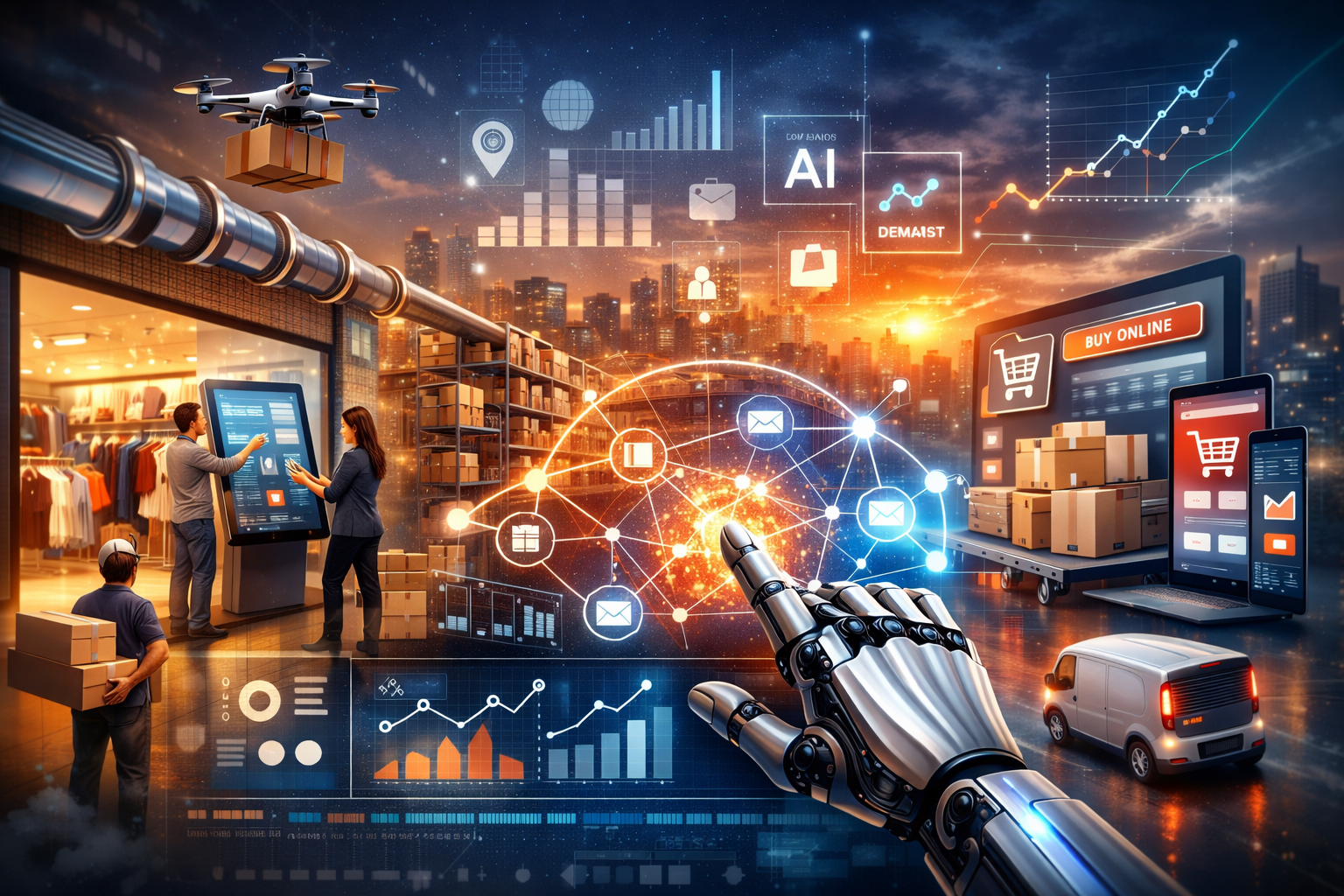
At Undiz, for example, customers select products on an in-store screen. Items are then delivered instantly from available stock through pneumatic tubes. This model turns the store into a connected micro-warehouse. It requires real-time inventory visibility and precise allocation across locations.
On top of omnichannel complexity, retailers must also deal with volatile demand, unpredictable promotional peaks, and growing regulatory constraints. Supply chains have never been under this much pressure. Without the ability to anticipate and adapt, retailers face stockouts, excess inventory, and broken omnichannel promises. Over time, this erodes both competitiveness and customer trust.
Algorithmic autonomy as the new brain of omnichannel retail
To cope with this complexity, the future of retail depends on autonomous algorithms capable of managing demand forecasting, store-level inventory, and the orchestration of physical and digital flows in real time.
These systems continuously analyze sales data, social signals, logistics constraints, and regulatory requirements. They anticipate promotional peaks, optimize local assortments, and reduce both stockouts and overstocks.
This goes far beyond traditional automation. Algorithmic autonomy transforms the physical store into a strategic asset. Each location can function as a showroom, a pickup point, or a local logistics hub. Retailers that adopt this approach stop reacting to volatility. They stay ahead of it and build a sustainable competitive advantage.
Augmented decision-making when AI becomes a co-pilot
In practice, agentic AI is already reshaping how retail teams operate. Business users no longer spend their days digging through reports to identify problems. Instead, they receive immediate alerts when a risk or opportunity emerges.
A planner can be notified of a stockout risk on a best-seller in a specific region, a critical supplier delay, or a demand spike driven by weather or local trends. Through natural-language interactions, they can assess the financial impact of different options.
They can reallocate inventory, adjust logistics, or launch targeted promotions. Once a decision is validated, it is executed instantly across operational systems. The gap between insight and action disappears.
Continuous orchestration of assortments and store clusters
Over the course of a season, the same mechanisms reshape how assortments are built and adjusted. Merchandising teams can test strategic shifts in real time. They can increase the share of sustainable products, refocus on priority categories, or adapt assortments to local market needs.
Simulations take into account budget constraints, supply chain capacity, and regional customer expectations at the same time. Store clusters are no longer defined only by historical performance. They evolve dynamically based on climate, customer profiles, and margin potential.
Retail is moving toward a model of continuous orchestration. Pricing, inventory, allocation, and production decisions become part of a living system. This system learns, anticipates, and constantly adapts to market volatility.
Redefining the future of physical retail with agentic AI
Retail will continue to transform deeply in the years ahead. Physical commerce is evolving into a hybrid model that combines customer experience with agile logistics.
With the rise of agentic AI, retailers can fully leverage technology to automate their supply chains and orchestrate omnichannel execution. They will no longer simply follow the market. They will help redefine it.